
Dental implants: what to expect, step by step
From the first scan to your final crown — how a dental implant works, how long it takes, and how to look after it for years to come.
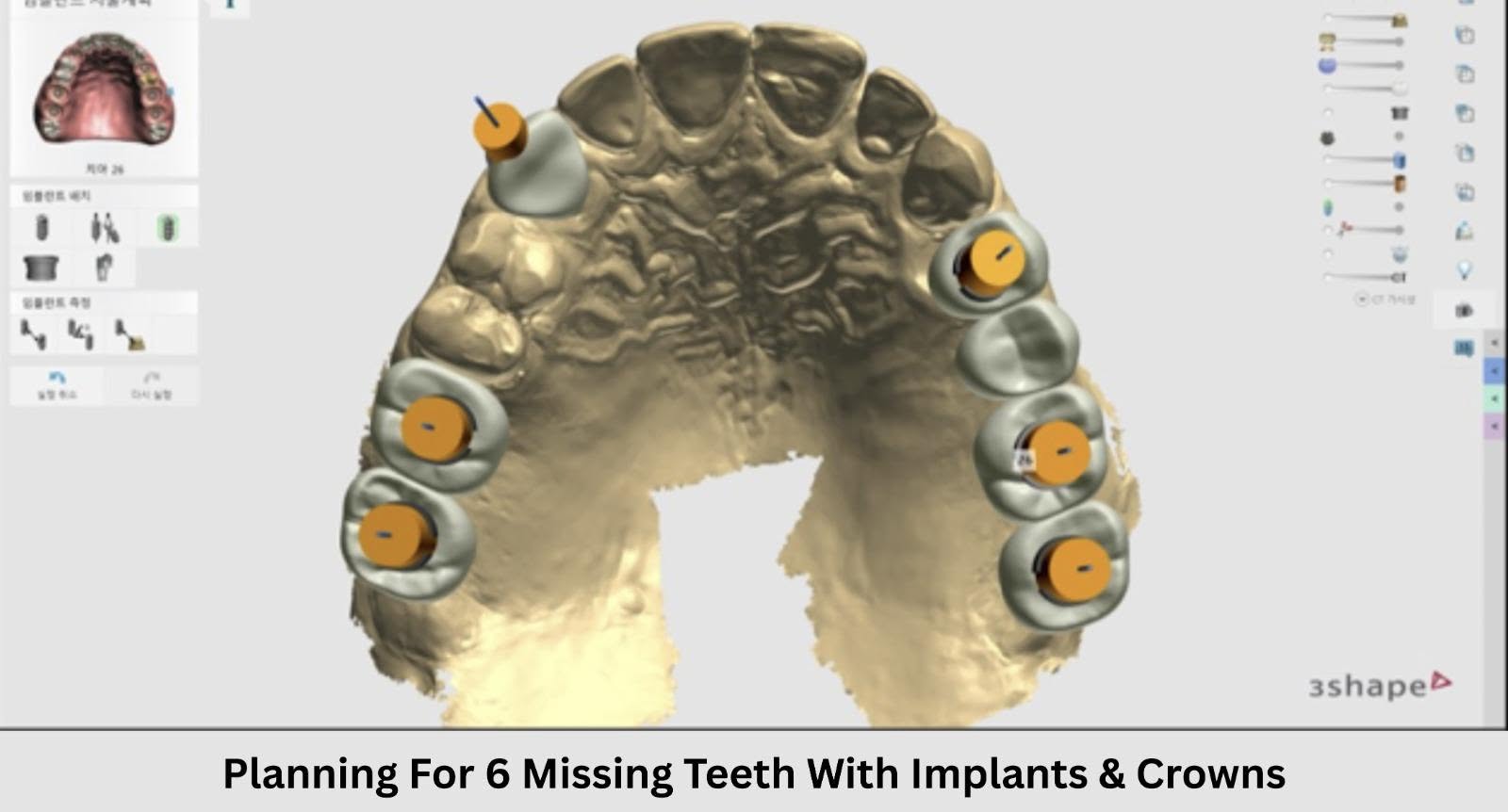
A dental implant replaces a missing tooth from the root up. A small titanium post is placed in the jawbone, the bone bonds to it over a few months, and a custom crown is fixed on top. Done well, it looks, feels and works like a natural tooth — and it doesn’t rely on the teeth next to it for support.
Is an implant right for you?
Implants suit most healthy adults who have lost one or more teeth. What matters most is:
- Enough healthy bone to hold the implant — if there isn’t, a bone graft can often help.
- Healthy gums — any gum disease needs treating first.
- Your general health — smoking and some conditions, such as poorly controlled diabetes, can slow healing. We’ll talk this through with you.
Step 1: Assessment and digital planning
We examine your mouth, take X-rays or a 3D scan, and plan the implant’s exact position on screen — its angle, its depth and the shape of the final tooth. Planning digitally helps us avoid nerves and sinuses and place the implant exactly where your bite needs it.
Step 2: Placing the implant
Implant placement is usually done under local anaesthesia, so the area is numb and you stay awake and comfortable. Most people are surprised by how little they feel. Afterwards there may be some swelling or tenderness for a few days, which settles with simple painkillers and the aftercare we give you.
Step 3: Healing
Over the next few months — typically three to six — the bone bonds with the implant, a process called osseointegration. In the meantime you can usually have a temporary tooth, so you’re not left with a visible gap.
Step 4: Your final crown
Once the implant is stable, we take a precise digital scan and fit a custom crown — often zirconia — matched to the shade and shape of your natural teeth.
How long do implants last?
With good care, implants can last for many years — often decades. The crown on top may eventually need replacing, like any restoration. The secrets are the same as for natural teeth: brush twice a day, clean between your teeth, don’t smoke, and keep up your check-ups.
Common questions
Does it hurt?
The procedure is done under local anaesthesia. Most patients describe mild soreness afterwards rather than pain.
How many visits will I need?
Usually three or four: assessment, placement, a check during healing, and fitting the final crown.
Can I travel to Dhaka for implants?
Yes — many of our patients do. See our international patients page for how we plan treatment around your trip.
Dental implants at Dental Perfection →
This article is general information, not a diagnosis. Every mouth is different — please see a dentist for advice about your own teeth.
Keep reading
How often should you see a dentist?
For most people, about every six months — but the right interval depends on your teeth and gums. What a check-up involves,…

Travelling to Dhaka for dental treatment: a planning guide
How to plan dental treatment around a trip to Dhaka — from sending photos before you fly to aftercare once you’re home.

Dental emergency? What to do in the first hour
A knocked-out tooth, a broken tooth, severe toothache or swelling — simple steps that protect your tooth until you can see a…